Umeboshi
Umeboshi is a healthy food made from the umé fruit, a variety of apricot, although it is commonly considered a plum. This fruit is selected, washed, salted, preserved, and colored with shiso leaves in a fermentation process that lasts several months. During this time, its citric acid content increases—one of the key elements that contributes to its health benefits.
Umeboshi plums support intestinal transit and stand out for their citric acid content and high levels of vitamins and minerals, especially calcium, iron, and phosphorus.
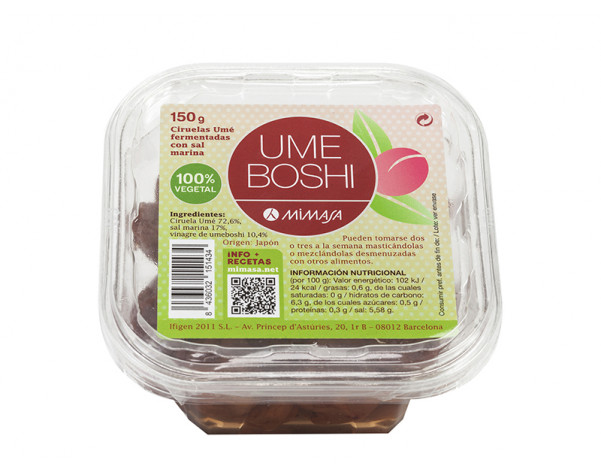
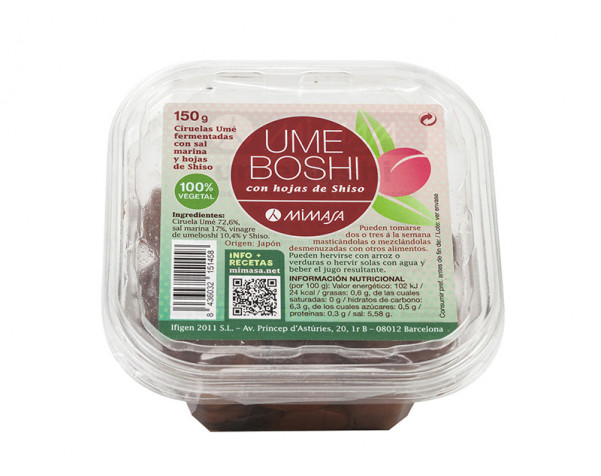
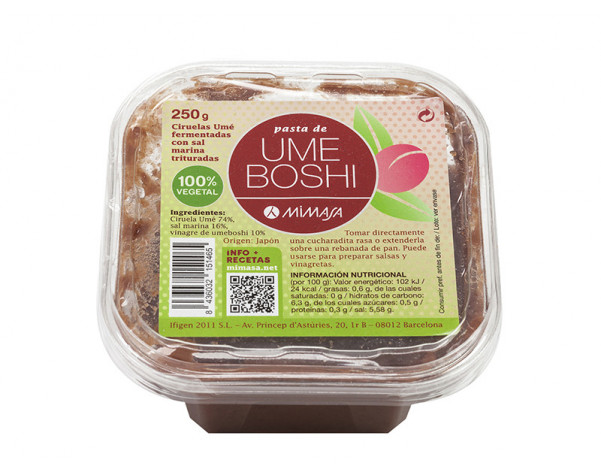
At Mimasa, we offer a range of high‑quality umeboshi products made using traditional Japanese methods. Discover natural umeboshi—whole fermented plums preserved in salt; umeboshi with shiso—plums accompanied by shiso leaves; and umeboshi paste, made from the umé fruit.
Get to know them!
History of the umeboshi
Ume fruit has been part of the Japanese culture for centuries. Umeboshi were taken to Japan for the first time about 1,500 years ago, as a medicine made with ume fruit. There are records on the efficiency of umeboshi in Chinese medicine books that date back from 3,000 years ago. Its use became popular among priests and samurai warriors starting in the 12th century.
In the wars during the 15th and 16th centuries samurai warriors really appreciated umeboshi, and always carried it around to help them “revive”, even when they were on the verge of death. During this time this healthy food was still considered just as medicine. It was not until the 17th century that every family started producing their own umeboshi at home.
Umeboshi finally started to be eaten normally by families in the 19th century. During that time it was the custom to pour green tea over umeboshi and some Kombu seaweed to drink it as a revitalizing tonic. Nowadays, umeboshi are considered as a traditional Japanese pickled food and are eaten as is or with rice.
Source of citric acid
The citric acid cycle is basic in our body to overcome fatigue. During the assimilation of nutrients (proteins, carbohydrates, fats and vitamins) the so-called fatigue physiological substances are produced (lactic acid, pyrodextrose or glucose.) If the body is not functioning correctly such substances are not fully eliminated and acidify blood, thus producing fatigue. Citric acid turns lactic acid into carbonic acid and water, which are easily eliminated. This is why eating one, citric acid-packed umeboshi a day helps overcome fatigue and slows down ageing. Citric acid is more abundant and easier to assimilate in ume fruit than in lemons.
Citric acid also helps to fix and absorb calcium. Pregnant women often crave something sour early in pregnancy because of an instinctive need for citric acid, which boosts the rate of calcium absorption and helps form the skeletal structure of the embryo.
Citric acid not only controls the secretion of gastric juice, but also helps prevent stomach ulcers and stimulate the appetite of weak or elderly people.
Would you like to try them?
Digestive properties
Ume fruit-based foods contribute to the proper functioning of the digestive and hepatic system and avoid undesired proliferation of bacteria. Normally, the bacteria in the mouth are killed by the hydrochloric acid in the stomach. A healthy person’s stomach is always acidic; therefore, the bacteria that cause food poisoning and other troubles are killed in the stomach. However, when the stomach is in a weak state or the secretion of gastric juice is not working well, the bacteria go through the stomach and reach the intestines alive.
The organic acids in Umeboshi make the intestines temporarily acidic, to prevent the live bacteria from increasing in number. After being absorbed through the intestinal wall the acids become alkalized and enter the bloodstream to maintain alkalized
Organic acids contained by ume fruit are effective in treating constipation and diarrhea because they normalize the function of the intestines by sterilizing only low-density lipoprotein, leaving high-density lipoprotein in place.
Umeboshi plums have multiple digestive benefits!
Umeboshi, a source of citric acid
The citric acid cycle is essential in our body to overcome fatigue. During the assimilation of nutrients (proteins, carbohydrates, fats, and vitamins), the so‑called physiological fatigue substances are produced: lactic acid, pyrodextrose, or glucose. If the body does not function properly, these substances are not sufficiently eliminated and acidify the blood, resulting in fatigue. Citric acid breaks down lactic acid into carbonic acid and water, which are easily eliminated. For this reason, the daily intake of one umeboshi, which contains a high amount of citric acid, helps overcome fatigue and slows aging. The citric acid in umé is present in greater quantities than in lemon and is more easily assimilated.
Citric acid also helps with the fixation and absorption of calcium. The reason why pregnant women often crave something sour at the beginning of pregnancy is an instinctive need for citric acid, which increases the rate of calcium fixation for the formation of the embryo’s skeletal structure.
In addition, it not only regulates the secretion of gastric juices but also helps prevent stomach ulcers and stimulates the appetite of weak or elderly individuals.
Maintain a healthy lifestyle!
Healthy foods from Mimasa
At Mimasa, you’ll find high‑quality healthy foods made with ingredients sourced from their place of origin and crafted using traditional methods, without industrial or chemical processes.
Our online store offers a wide variety of healthy foods so you can enjoy the incredible properties each one provides. Add to your diet the benefits of Soy, Seaweeds, Plant-based Proteins, Drinks, and Cereals, among others.
Discover the richness of these foods!